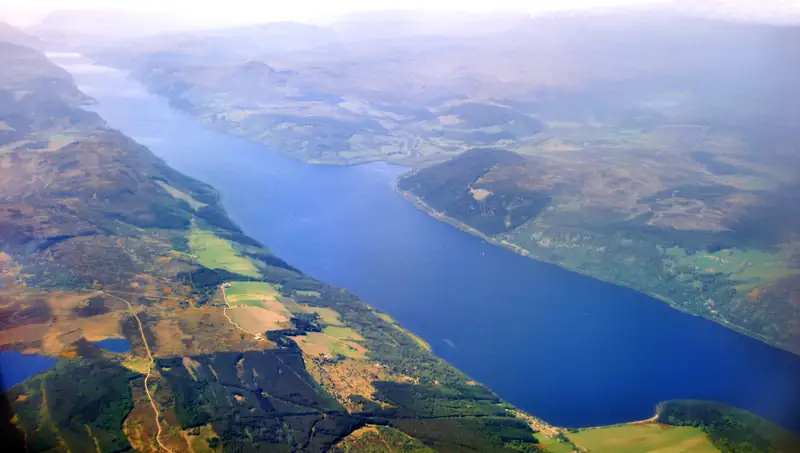
No evidence has ever been found of a large unknown animal in Loch Ness. Sonar sweeps in 1987 and 2003 found nothing large, and a 2018 DNA survey of the water found no reptile DNA but plenty of eel DNA. The modern legend began in 1933 at the Drumnadrochit Hotel, and the most famous photograph was a hoax.
Is the Loch Ness Monster real? Nobody has ever found evidence that it is. Sonar sweeps of the whole loch in 1987 and 2003 found no large animal. In 2018 scientists sampled the water itself for DNA and found no trace of reptiles, no sturgeon, sharks or catfish, and a great deal of eel DNA; the results were announced on 5 September 2019. The most famous photograph of Nessie was a hoax made with a toy submarine.
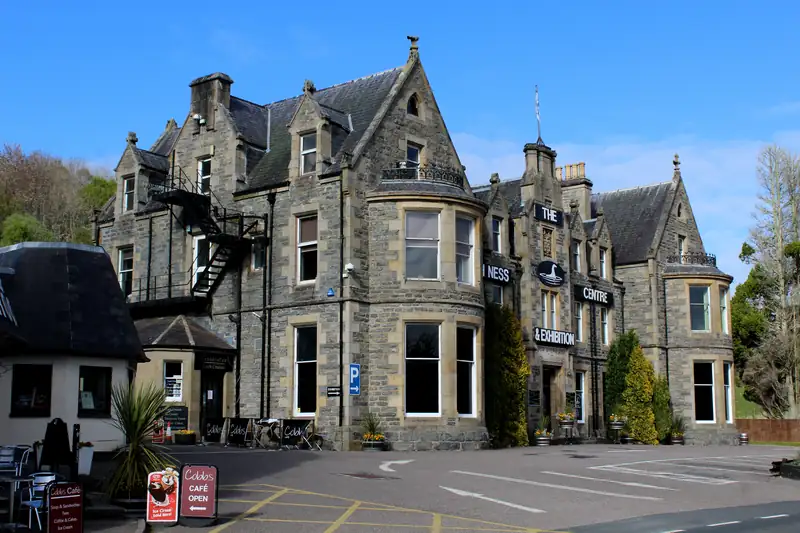
And yet people keep looking, and a register of sightings still logs new reports every year. The story started in Drumnadrochit, in a hotel that is now the Nessie exhibition, and the village is still the best base for a look of your own.
The short answer, in more detail
The case for a large animal rests on eyewitness reports and a handful of photographs and films. The case against rests on searches that would have found one.
Sonar. In October 1987 Operation Deepscan sent a line of boats with echo sounders down the loch in a “sonar curtain”, led by Adrian Shine of the Loch Ness Project. It picked up a few contacts that were never explained; fish, seals, debris and thermal effects have all been suggested. In 2003 a BBC-sponsored search used 600 sonar beams and satellite tracking and found nothing large.
DNA. Every animal sheds traces of DNA into the water around it, in skin, scales and waste. Scientists call this environmental DNA, or eDNA. From June 2018 a team led by Professor Neil Gemmell of the University of Otago in New Zealand collected water samples at about 250 sites and depths. They found no reptile DNA, which tells against the popular idea of a surviving plesiosaur, and no sturgeon, shark or catfish. Eel DNA turned up in large amounts. Gemmell would not rule out large eels, and that is the closest science has come to a candidate.
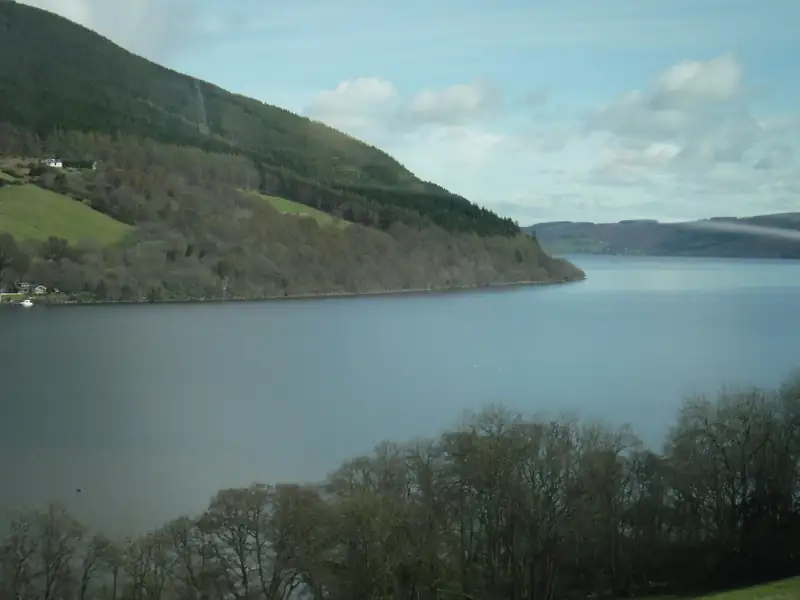
The loch itself. Loch Ness is big enough to hide things in, which is part of the appeal. It is about 37 km (23 miles) long, up to 230 m deep and 132 m deep on average, and according to NatureScot it holds more fresh water than all the lakes in England and Wales combined. It is not Scotland’s deepest loch, though; NatureScot gives that title to Loch Morar.
So: no body, no bones, no reptile DNA, and the best photograph was faked. That is a fair summary of the evidence. Whether it settles the question is up to you.
Timeline of the Loch Ness Monster
| Date |
Event |
| About AD 700 |
Adomnán writes his Life of Columba, including the “water beast” in the River Ness (traditionally dated 565) |
| April 1933 |
Aldie Mackay, manageress of the Drumnadrochit Hotel, and her husband see a “whale-like” disturbance near Abriachan |
| 2 May 1933 |
The Inverness Courier reports it; the modern legend begins |
| 22 July 1933 |
George Spicer reports a creature on land; the Courier prints it on 4 August |
| April 1934 |
The “Surgeon’s Photograph” appears in the Daily Mail |
| 1980 |
The Loch Ness Centre and Exhibition opens in the old Drumnadrochit Hotel |
| October 1987 |
Operation Deepscan sweeps the loch with sonar |
| 18 July 1991 |
Steve Feltham begins his vigil on Dores beach |
| 1994 |
The Surgeon’s Photograph is exposed as a hoax |
| 2003 |
A BBC-sponsored sonar search finds nothing large |
| 2018 |
The University of Otago eDNA survey samples the loch |
| 5 September 2019 |
eDNA results announced: no reptiles, lots of eels |
| 26 and 27 August 2023 |
The Loch Ness Quest, billed by its organisers as the biggest search in over 50 years |
| 28 to 31 May 2026 |
The latest Quest, with an underwater survey of Urquhart Bay |
St Columba and the water beast
The oldest written link between this area and a monster comes from a saint’s biography. Adomnán, abbot of Iona, wrote his Life of Columba in Latin around AD 700, about a century after the saint’s death. In one chapter Columba, travelling among the Picts, comes to the River Ness. Locals are burying a man who was bitten to death by a “water beast” while swimming. Columba sends his companion Lugne across the river to fetch a boat. The beast rises from the riverbed and charges, and Columba makes the sign of the cross and orders it back. It flees.
Two details matter. The story is set in the River Ness, which runs from the loch to Inverness, not in the loch. And Adomnán gives no year; 565 is the traditional date. The book is full of miracles of this kind, so historians read it as a story about the saint’s power, not as a wildlife report. It is the earliest written story, not the first sighting.
1933: the legend starts in Drumnadrochit
In April 1933 Aldie Mackay, who managed the Drumnadrochit Hotel, and her husband saw something large churning the water on the north shore, not far from Abriachan pier. Alex Campbell, the local water bailiff and a part-time journalist, wrote it up for the Inverness Courier, which ran the story on 2 May 1933 without naming the couple. Who first used the word “monster”, Campbell or his editor Evan Barron, is disputed.
Then, on 22 July 1933, George Spicer reported seeing a creature on land near the loch. The Courier printed his account on 4 August, and it set off the wide public interest that has never quite died down.
The hotel where it began now houses the Loch Ness Experience, which tells this story in far more detail.
The Surgeon’s Photograph and other fakes
The picture everyone knows, a small head on a curved neck rising from flat water, appeared in the Daily Mail in April 1934. It was credited to Robert Kenneth Wilson, a London gynaecologist, which gave it a respectable name and its nickname.
It was fake. The “monster” was a toy submarine bought from Woolworths, with a head and neck sculpted from wood putty. Christian Spurling made it for his stepfather, Marmaduke Wetherell, who wanted revenge on the Mail. Wilson was the front man, recruited through an insurance agent, Maurice Chambers, so the photograph would not be traced to Wetherell. Spurling confessed late in life to the researchers David Martin and Alastair Boyd, and the story broke in 1994. Their book on it followed in 1999.
One more fake Nessie lies on the bottom of the loch, though this one was never meant to fool anyone. In 2016 an underwater robot surveying the loch was reported to have found a sunken Nessie model, a prop built for Billy Wilder’s 1970 film The Private Life of Sherlock Holmes. The 2026 Quest surveyed it again.
The searches since
Adrian Shine’s Loch Ness Project has been based in the old Drumnadrochit Hotel for more than 40 years, and Operation Deepscan in 1987 was its best-known effort.
The most recent searches have been public events. The 2023 Loch Ness Quest, run by the Loch Ness Centre with the volunteer group Loch Ness Exploration, used thermal drones, a hydrophone (an underwater microphone) and volunteers on the shore. It found nothing conclusive. The 2026 Quest added an underwater vehicle from Deep Sea Vision to map Urquhart Bay.
Then there are the individuals. Steve Feltham began a vigil on Dores beach on 18 July 1991, living in a converted mobile library van, and Guinness World Records lists him for the longest continuous vigil seeking the monster. We could not confirm whether he is still there in 2026.
Reports keep coming in. The Official Loch Ness Monster Sightings Register, started by Gary Campbell in 1996 after a sighting of his own, counted 1,180 reports in October 2026, from St Columba’s story onwards. Fifteen of them were dated 2026. A listing records what someone reported; it is not proof of an animal. For the year-by-year reports and the live webcams on the loch, see our Loch Ness Monster sightings page, and for the loch itself, our Loch Ness guide.
Nessie hunting from Drumnadrochit
Drumnadrochit sits on Urquhart Bay on the west side of the loch, and most of the Nessie sites are within a couple of miles.
The Loch Ness Experience. Start here. The one-hour, eight-room tour in the old hotel covers the 1933 sighting, the searches and the science, and ends by asking what you think. An adult ticket was £15.75 online in October 2026.
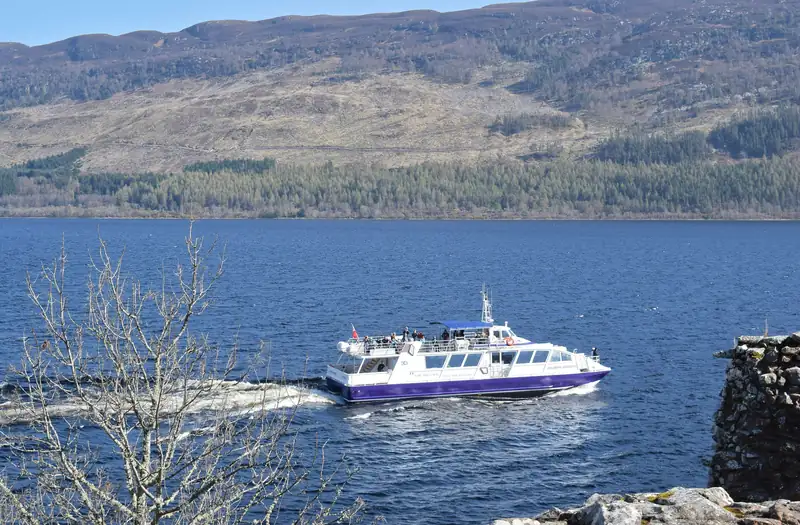
On the water. Two boats sail from the village. The Loch Ness Experience’s Deepscan carries up to 12 people with sonar on board; Loch Ness Cruises’ Nessie Hunter leaves from Urquhart Bay. Jacobite’s boats sail from Clansman Harbour, about 4 miles north of the village, and from Dochgarroch near Inverness. If you are coming from Inverness, the top pick on this page is a half day that includes a cruise with a sonar watch and an hour at Urquhart Castle. Our Loch Ness cruise guide compares the boats.
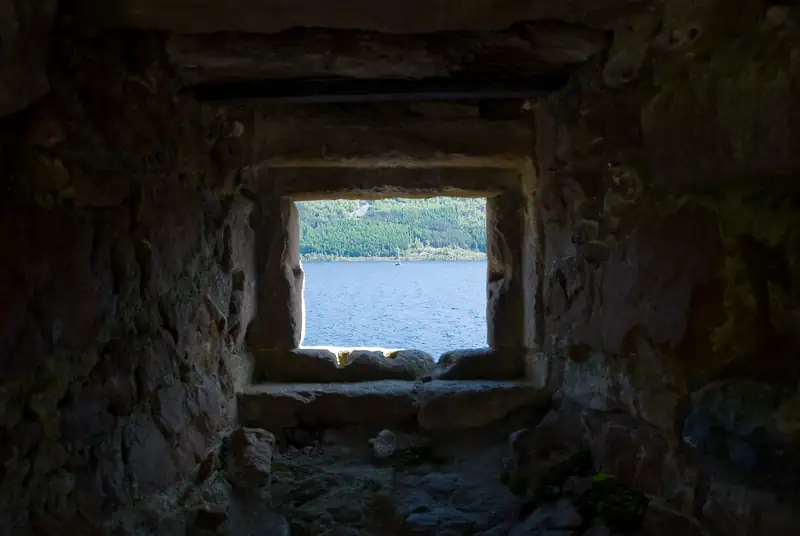
From the shore. Urquhart Castle, 2 miles south of the village, looks straight along the loch, and several recent sightings on the register were made from its shoreline or viewpoint. Dores beach, on the east shore near Inverness, is where Steve Feltham kept watch.
Nessieland. For young children, Nessieland next to the Loch Ness Experience has play areas and a model railway with a Nessie. See our Nessieland guide.
Bring binoculars, pick a calm day, and watch the water off Urquhart Castle for a while. You will almost certainly see a boat wake. What you make of it is your business.