From Inverness: Glen Affric, Culloden, and Clava Cairns Tour
9 hours
Clava Cairns and Culloden in the morning, then waterfalls and old Caledonian pine forest in Glen Affric, Beauly Priory and a last look at Loch Ness.
from$83
Check availability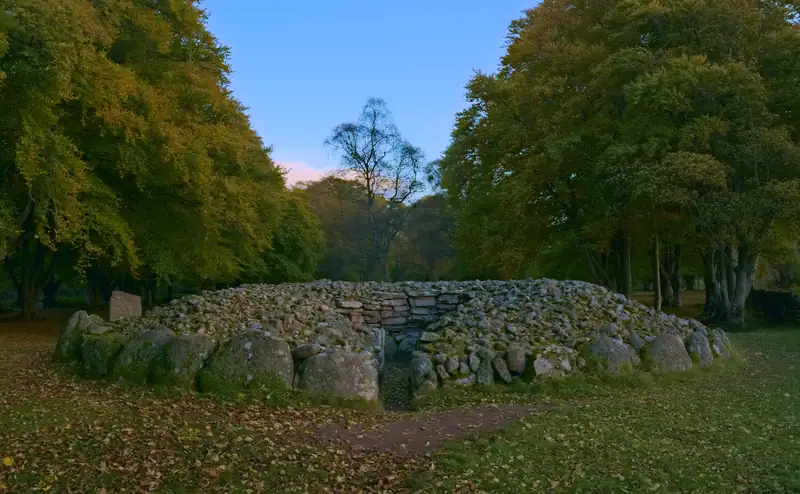
The Clava Cairns are a Bronze Age cemetery about 4,000 years old, 7 miles east of Inverness and a three-minute drive from Culloden Battlefield. Historic Environment Scotland looks after the site, which is free and open all year. Three large burial cairns, each ringed by standing stones, line up with the midwinter sunset.
The Clava Cairns are a Bronze Age cemetery about 4,000 years old, on a terrace above the River Nairn just east of Inverness. Historic Environment Scotland (HES) looks after them, and they are free to visit at any time of year. Three big stone burial cairns, each inside a ring of standing stones, sit in a line in a small wood, with their passages pointing towards the midwinter sunset.
The site is 7 miles from Inverness and signposted 300 yards east of Culloden Battlefield, so most people see both in one trip. From Drumnadrochit on Loch Ness it is about 23 miles, a 40-minute drive.
Checked October 2026 on the HES plan your visit page.
| Entry | Free |
| Opening | All year, no set hours |
| Signposted from | The B9091, 300 yards east of Culloden Battlefield |
| Parking | Small car park at the site |
| Access road | 17-tonne vehicle weight limit |
| Facilities | None listed by HES; do not count on toilets (the Culloden visitor centre has them) |
The main group is at Balnuaran of Clava. HES lists two passage graves, a ring cairn in the middle, a smaller kerb cairn, and the standing stones around them. Each of the three big cairns has a central chamber. The two outer cairns have a passage running into the chamber. The central cairn’s chamber is closed, with no passage.
Look closely at the stones in the cairns. Many carry small cup-shaped hollows (cup marks), which HES thinks may have come from an older sacred site and been reused.
A short distance south-west, Milton of Clava has the remains of a medieval chapel of unknown date and traces of another cairn and possible standing stones.
This is the detail that makes Clava more than a pile of stones. The three main cairns run in a line from north-east to south-west. The passages of the two outer cairns point south-west too, towards where the sun sets at midwinter. The standing stones are graded in height, and HES notes that the tallest face the setting sun in the south-west.
HES reads this as a sign that midwinter mattered to the people who built the cemetery. Many monuments across the British Isles share a similar alignment with the midwinter sun.
HES dates the row of three large cairns to about 2000 BC. There may once have been two more. The chambers were cleared out long ago, but similar monuments suggest only one or two people were buried in each cairn, which, given the work involved, points to important individuals.
About a thousand years later the cemetery was used again. New burials went into the existing cairns, and three smaller monuments, including the kerb cairn, were built.
Clava also gives its name to a whole type of monument. HES counts about 50 “Clava cairns”, found only around the Moray Firth and Inverness, which combine features of ring cairns, passage graves and stone circles. One example is the Corrimony Cairn in Glen Urquhart, about 14 km from Drumnadrochit, where, unlike at Clava, much of the passage roof survives.
Clava is a popular stop for Outlander fans. VisitScotland says the site “inspired Craigh na Dun”, the stone circle Claire travels back in time through. Visit Inverness Loch Ness, the area’s tourism body, puts it more carefully: one of the standing stones is much like the stone at Craigh na Dun in the TV series, and another is a split rock, as described in the first book.
The cairns are not a filming location. In 2017 a VisitScotland director told The Scotsman that “the Clava Cairns don’t feature on screen”, while HES reported a surge in visitors to the site from the series. Diana Gabaldon’s own account of where Craigh na Dun came from is not something we could confirm, so treat claims that she named Clava as unproven.
The battle at the heart of the story was fought next door at Culloden, and Visit Inverness Loch Ness also links the Corrimony Cairn to the books.
Clava fits easily into a day from Loch Ness. Stay in Drumnadrochit and you can do Clava and Culloden in the morning and be back by the loch for the afternoon.
9 hours
Clava Cairns and Culloden in the morning, then waterfalls and old Caledonian pine forest in Glen Affric, Beauly Priory and a last look at Loch Ness.
from$83
Check availability9 hours
A cheap full day that sails 30 minutes to Urquhart Castle for 70 minutes in the ruins (ticket included), then adds Beauly, Culloden Battlefield and the Clava Cairns standing stones.
from$60
Check availability9 hours
Cruises to Urquhart Castle for a look round the ruins, then works in a distillery visit, lunch in Beauly, Culloden Battlefield and the Clava Cairns before evening.
from$98
Check availability4 hours
A private half day from Inverness to the Bronze Age cairns above the River Nairn and the Culloden battlefield, with the Jacobite story told by your guide.
from$471 per group (up to 8)
Check availabilityPrices and ratings were taken from GetYourGuide and can change. Booking through these links supports this site at no extra cost to you.
Yes. Historic Environment Scotland says the Clava Cairns are free to visit and open year-round, and there is no ticket office or gate. There is a small car park beside the stones, and VisitScotland notes that interpretation boards on site explain how the cairns were built and why they mattered to the people who made them.
Not on screen. VisitScotland says the site inspired Craigh na Dun, the stone circle Claire passes through in Outlander, and Visit Inverness Loch Ness notes that one stone looks much like the TV stone and another is split, as in the first book. But a VisitScotland director told The Scotsman in 2017 that the Clava Cairns do not feature in the series.
Allow 30 minutes to an hour. The three main cairns at Balnuaran of Clava sit close together in a small wood, so a walk round them and the stone circles is short. Add a little more if you want to find the chapel remains at Milton of Clava, a short distance to the south-west, or combine the visit with Culloden next door.
About 4,000 years old. Historic Environment Scotland dates the row of three large cairns to around 2000 BC. About a thousand years later the cemetery was used again: new burials went into the old cairns and three smaller monuments, including the kerb cairn, were added. The chapel remains at Milton of Clava are much later and of unknown date.
Not to the door. The nearest stops are at the Culloden Moor Inn, served by Stagecoach routes 1B, 13 and 112 from Inverness, a little over a kilometre from the cairns in a straight line, and further by road. Most visitors without a car come on a day tour from Inverness that also stops at Culloden.
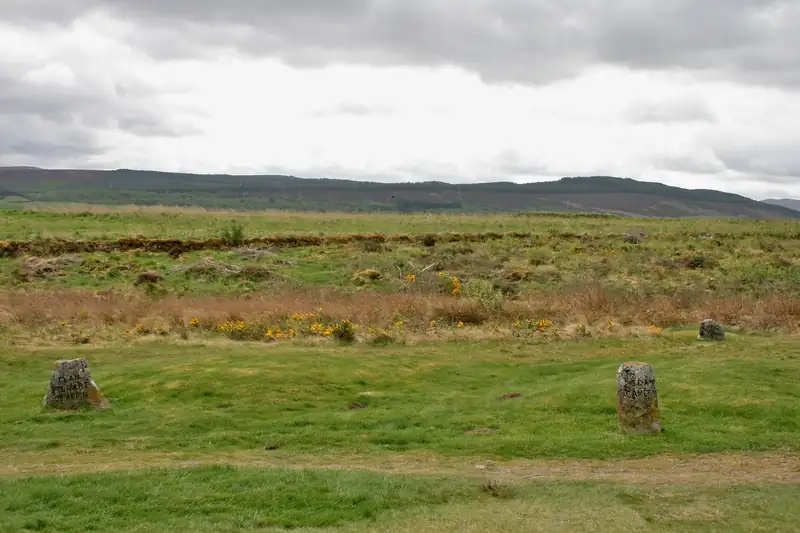
Culloden Battlefield is 5 miles east of Inverness, where the government army defeated the Jacobites on 16 April 1746.
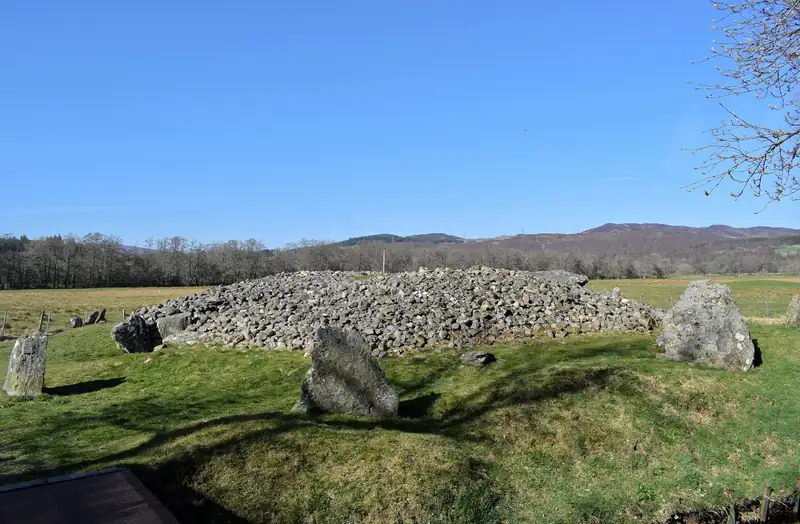
Corrimony Chambered Cairn is a Clava-type passage grave about 4,000 years old, ringed by 11 standing stones, in Glen Urquhart 8.5 miles west of Drumnadrochit.
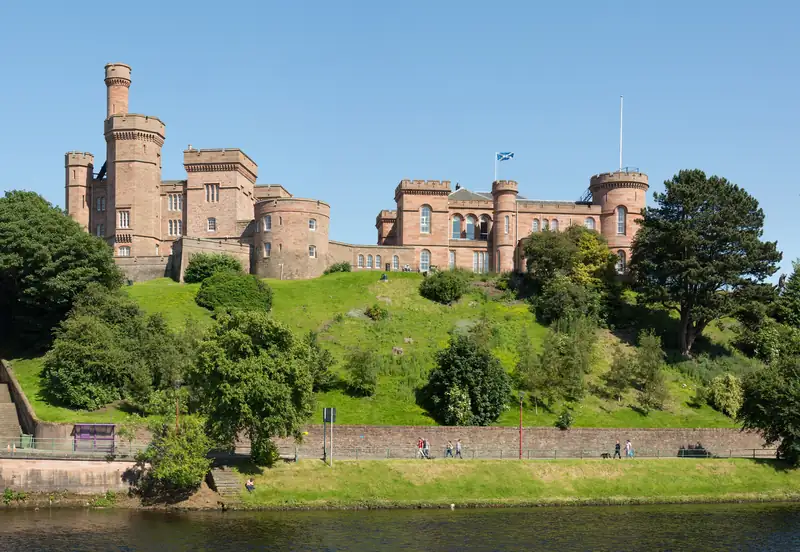
The best things to do in Inverness are the Inverness Castle Experience, a walk along the River Ness to the Ness Islands, the free cathedral and Leakey's Bookshop.
The best Loch Ness tour from Inverness is the 3.5-hour coach, cruise and Urquhart Castle trip from the bus station, from $75 on GetYourGuide with entry included.